Loyola Marymount University · Department of Biology
Dabir Lab
A mitochondrial biology lab, run by undergraduates.
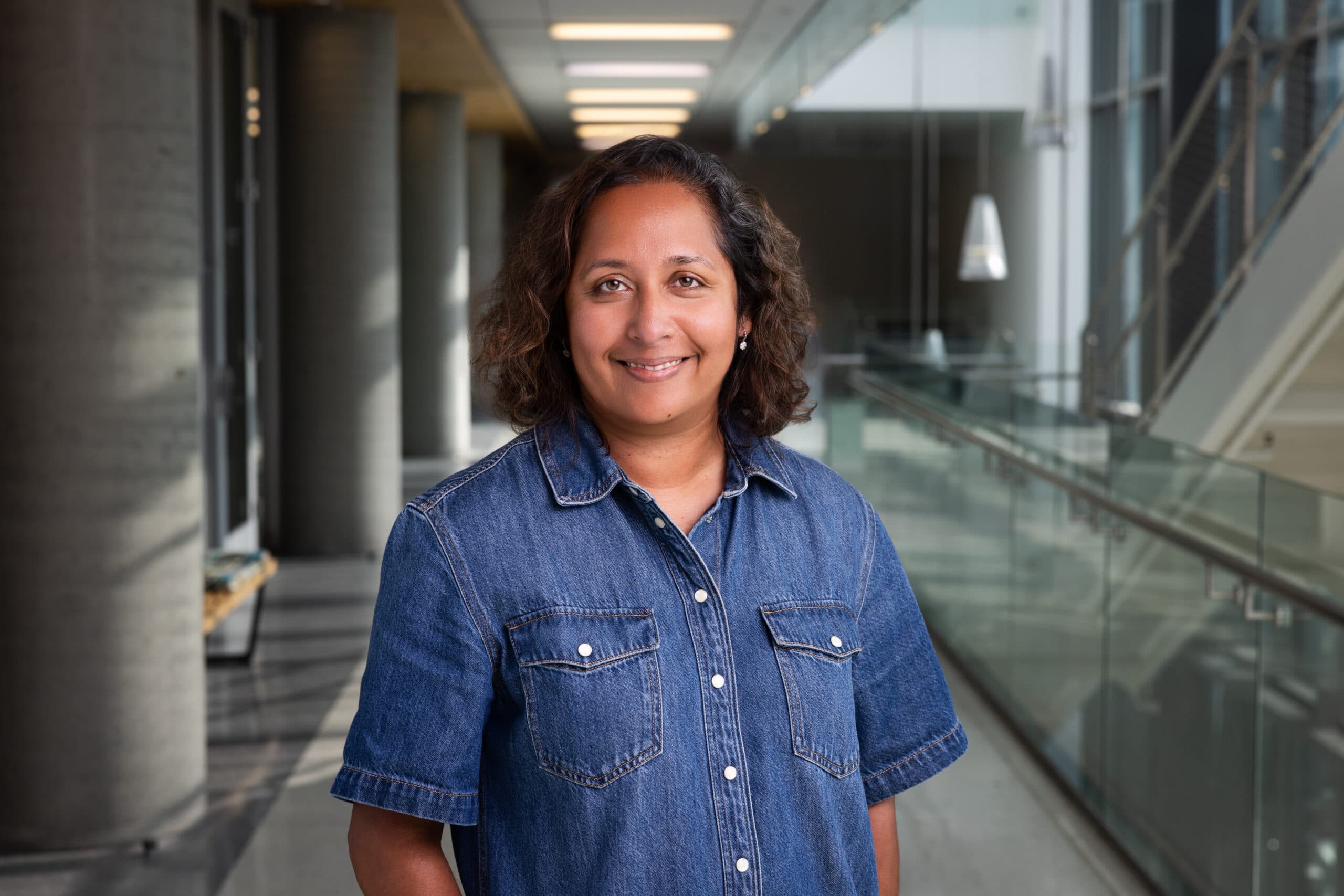
Deepa V. Dabir, Ph.D.
Chair and Professor of Biology
About our lab
Loyola Marymount University
“Mitochondria produce most of the energy a cell runs on, but they cannot build most of their own machinery. Around a thousand of their proteins are assembled elsewhere in the cell and imported. We work on that import machinery in budding yeast: how it recognizes its cargo, how it uses chemistry to pull a protein across a membrane, and what fails when it breaks. Import failures are implicated in human disease, so mapping the healthy process is the prerequisite for understanding the broken one.”
Highlights
Scroll
Research
All research01
Protein import
How the machinery of the mitochondrial intermembrane space recognizes the proteins it is meant to take in, and how it holds onto them once they are across.
02
Redox-regulated translocation
The Mia40-Erv1 disulfide relay and the electron acceptors that keep it turning over, among them cytochrome c, cytochrome c peroxidase, and Osm1.
03
Aim32
A dual-localized 2Fe-2S thioredoxin-like ferredoxin. We are working out what it does in mitochondrial biogenesis, in respiration, and in the assembly of the mitoribosome.
Selected publications
All publicationsAim32 is a dual-localized 2Fe-2S mitochondrial protein that functions in redox quality control
Zhang D, Dailey OR, Simon DJ, Roca-Datzer K, Jami-Alahmadi Y, Hennen MS, Wohlschlegel JA, Koehler CM, Dabir DV
Journal of Biological Chemistry
In vivo imaging of mitochondrial membrane potential in non-small-cell lung cancer
Momcilovic M, et al., Dabir DV, et al., Shackelford DB
Nature
A small molecule inhibitor of redox-regulated protein translocation into mitochondria
Dabir DV, Hasson SA, et al., Koehler CM
Developmental Cell
A role for cytochrome c and cytochrome c peroxidase in electron shuttling from Erv1
Dabir DV, Leverich EP, et al., Koehler CM
The EMBO Journal
The lab
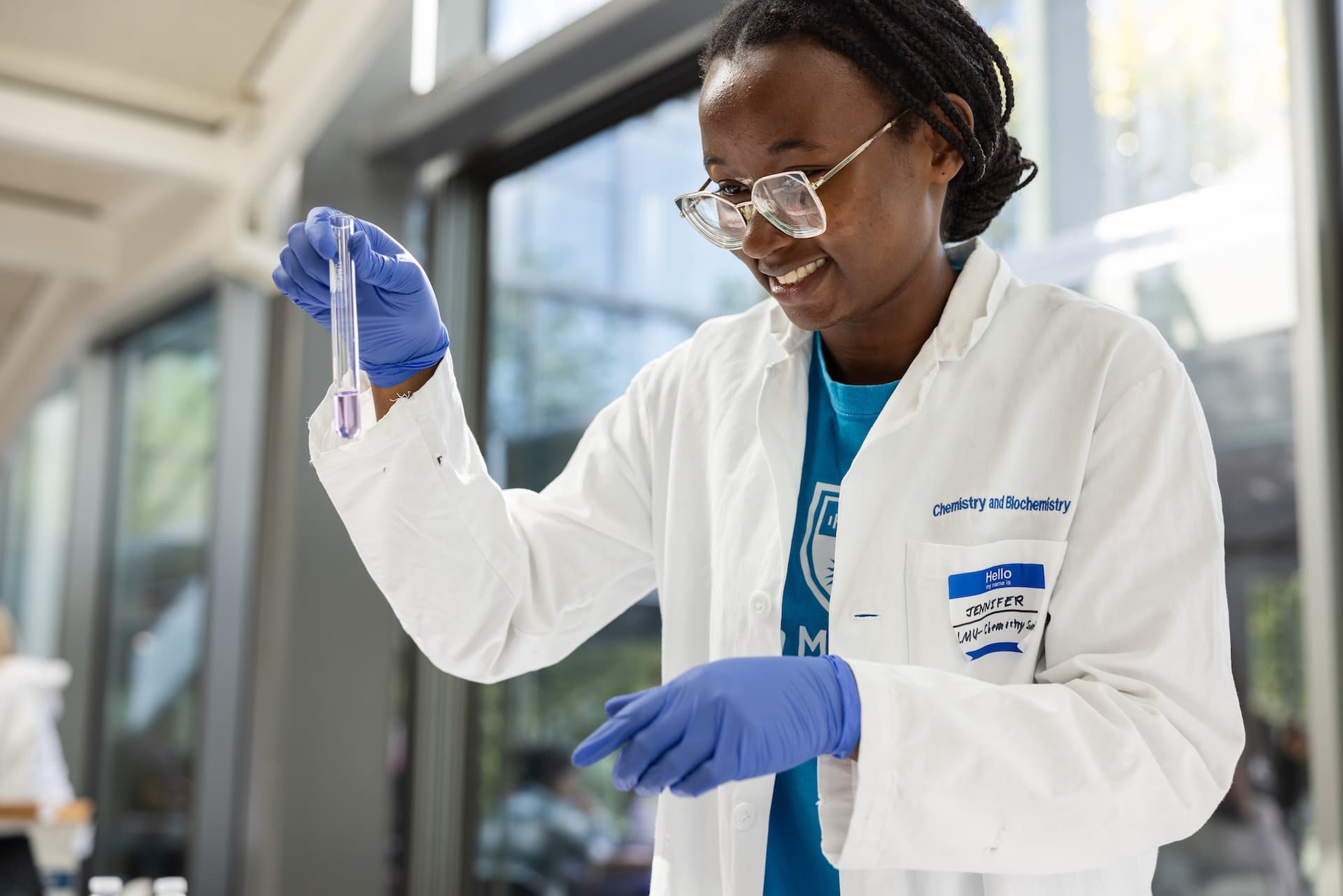
The lab is run by undergraduates. About six student researchers work here at a time, on budding yeast in part because it is a system an undergraduate can actually run. They present their own findings at conferences, and several have become authors on their own papers.
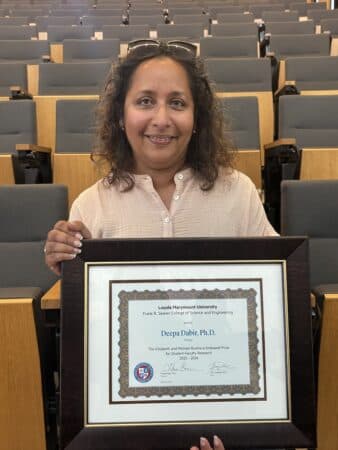
“An accomplished teacher-scholar, Dabir has mentored numerous undergraduate researchers, many of whom have become co-authors on peer-reviewed publications.”
Current support: the National Institute of General Medical Sciences, for Aim32, a Multi-faceted Redox Protein, in Mitochondrial Biogenesis.